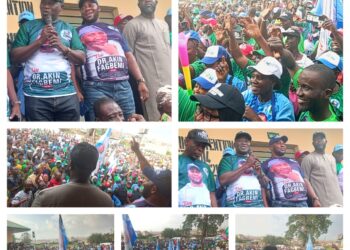

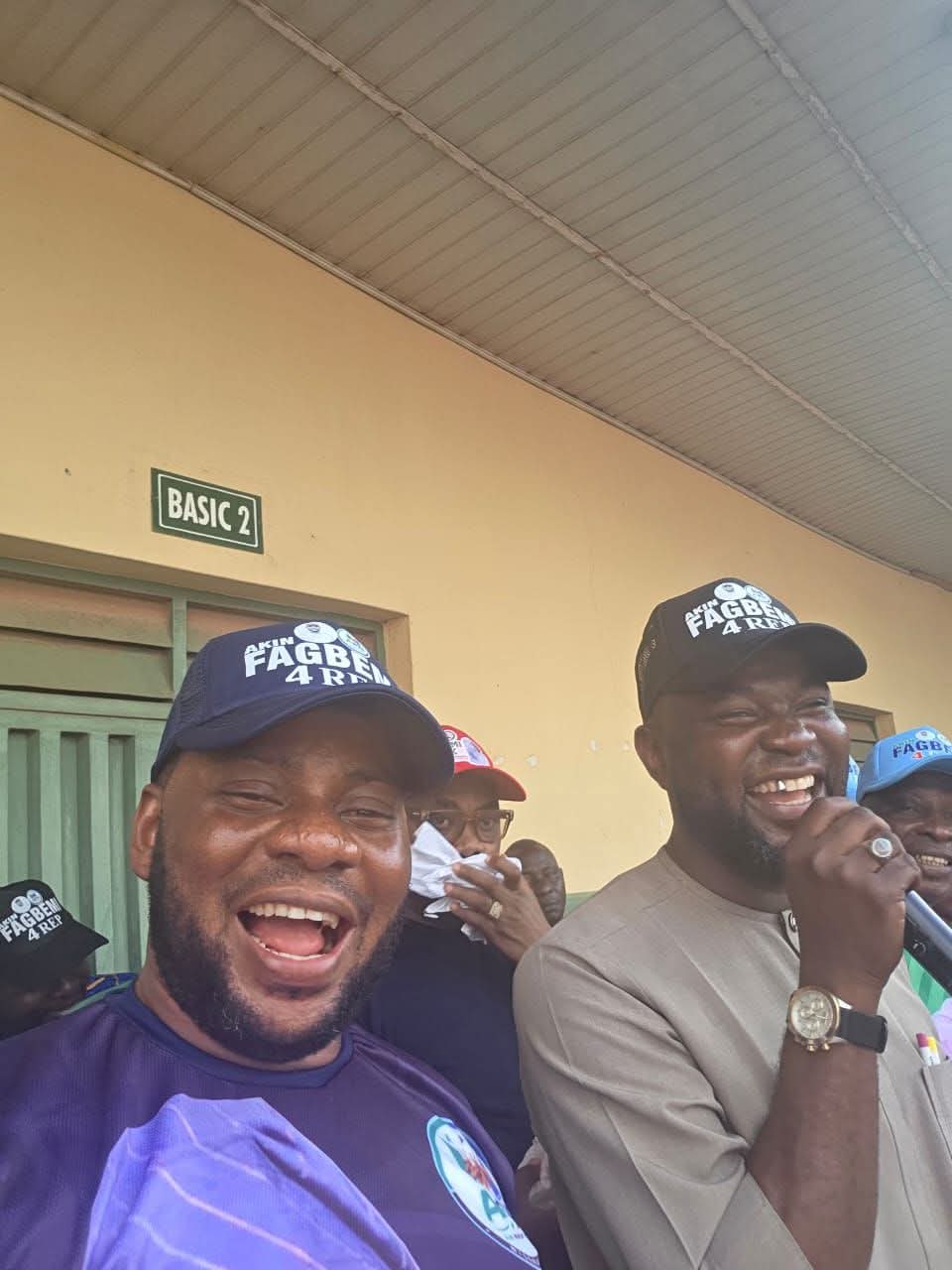


Politics should be a vehicle for unity, development and service to the people, not a source of division. The leadership approaches associated with Mogaji Akin Fagbemi, Ph.D. and Hon. Saheed Fijabi provide complementary models for building cooperation, strengthening representation and advancing the interests of the Ibadan North-West/Ibadan South-West Federal Constituency.
At a time when political parties and constituencies need unity, strategic thinking and effective grassroots engagement, the combination of these two approaches offers valuable lessons for the Allied Peoples Movement (APM).
THE AKIN FAGBEMI, Ph.D. MODEL: KNOWLEDGE, UNITY AND STRATEGIC LEADERSHIP
The Akin Fagbemi, Ph.D. model is anchored on intellectual capacity, consultation, strategic thinking, integrity and the ability to bring people together around common objectives.
It demonstrates that effective political leadership should promote:
- Knowledge-driven decision-making;
- Respect for diverse opinions and communities;
- Bridge-building across ethnic, religious and political differences;
- Fairness, inclusion and accountability;
- Strategic thinking focused on long-term development;
- Dialogue and consultation with stakeholders; and
- The collective interest above personal ambition.
These qualities are particularly important in a diverse constituency such as Ibadan North-West/Ibadan South-West. By encouraging dialogue and cooperation between communities, political stakeholders and different interest groups, this model can strengthen mutual understanding and build a more cohesive political structure.
THE FIJABI MODEL: GRASSROOTS REPRESENTATION AND PRACTICAL SERVICE
The Saheed Fijabi model places strong emphasis on grassroots accessibility, direct engagement and practical representation.
It is a model that recognises that political leadership must remain connected to the people and responsive to their everyday challenges.
Its key principles include:
- Regular interaction with constituents;
- Effective representation of constituency interests;
- Advocacy for roads, schools, healthcare, water and electricity;
- Youth and women empowerment;
- Support for small businesses and local enterprise;
- Listening to community concerns;
- Accountability and feedback; and
- Pursuit of measurable results.
The central lesson is simple: representation must translate into service. Political office should not merely be about occupying a position; it should be about creating opportunities and improving the quality of life of the people.
BENEFITS TO THE NORTH-WEST/SOUTH-WEST CONSTITUENCY
1. STRONGER UNITY AND COOPERATION
The combination of strategic leadership and grassroots engagement can help unite communities and political stakeholders across ethnic, religious and social lines.
A united constituency is better positioned to resolve internal disagreements and pursue common objectives.
2. BETTER POLITICAL REPRESENTATION
When strategic thinking is combined with grassroots knowledge, constituency advocacy becomes stronger.
The people can benefit from more coordinated engagement with state and federal institutions, ensuring that their concerns receive appropriate attention.
3. IMPROVED INFRASTRUCTURE
A united political structure can strengthen the constituency’s ability to attract development projects, including:
- Road construction and rehabilitation;
- Drainage and flood-control projects;
- Schools and skills-acquisition centres;
- Primary healthcare facilities;
- Water and electricity projects;
- Digital infrastructure; and
- Community development initiatives.
4. YOUTH EMPOWERMENT AND EMPLOYMENT
The constituency can benefit from coordinated programmes focusing on vocational training, entrepreneurship, technology, agriculture, skills development and access to business opportunities.
Young people should be viewed not simply as political supporters but as important partners in the development process.
5. GREATER ACCESS TO GOVERNMENT OPPORTUNITIES
A stronger and more united constituency can improve its ability to benefit from government interventions, grants, development programmes, appointments and other legitimate opportunities.
Unity also strengthens the constituency’s voice when negotiating for equitable representation and development.
6. PEACE AND SECURITY
Political cooperation can contribute to peaceful coexistence among communities.
When leaders maintain open channels of communication with constituents and community stakeholders, they are better positioned to identify emerging challenges, promote dialogue and support peaceful solutions.
7. INCLUSIVE DEVELOPMENT
The combined approach should ensure that development is not restricted to a particular group.
Women, youths, persons with disabilities, vulnerable families and underserved communities should all have a place in the development agenda.
8. GREATER POLITICAL INFLUENCE
A divided constituency has limited bargaining power. A united constituency has a stronger voice within political parties and government.
Unity can therefore improve the constituency’s ability to advocate for projects, representation, opportunities and fair treatment.
THE STRENGTH OF COMBINATION
The greatest value lies not in presenting the two models as competitors, but as complementary approaches to political leadership.
The Akin Fagbemi model brings knowledge, strategic thinking, consultation and bridge-building, while the Fijabi model emphasises grassroots connection, accessibility, practical representation and constituency service.
When these qualities are brought together, they can create a political culture where strategy meets grassroots reality, and leadership meets service.
For the Allied Peoples Movement, this represents an opportunity to build a stronger political structure based on cooperation rather than confrontation, inclusion rather than exclusion, and service rather than personal interest.
CONCLUSION
The future of politics in the North-West/South-West constituency should not be defined by division. It should be defined by unity, competence, accountability and service.
The Akin Fagbemi, Ph.D. model represents knowledge, strategic leadership, integrity and unity, while the Saheed Fijabi model represents grassroots connection, practical representation and constituency service.
Together, these approaches offer a foundation for inclusive, development-oriented and people-centred politics.
The message is clear:

POLITICAL UNITY WILL PRODUCE STRONGER REPRESENTATION, GREATER DEVELOPMENT, MORE OPPORTUNITIES AND A BETTER FUTURE FOR THE PEOPLE.
The challenge before political leaders and stakeholders is therefore to put aside unnecessary differences, build bridges, strengthen cooperation and place the collective interest above personal ambition.
Politics should unite the people. Leadership should serve the people. And development should benefit the people.
You can get every of our news as soon as they drop on WhatsApp ...To get all news updates, Join our WhatsApp Group (Click Here)