

THE ROLE OF THE NATIONAL HOME-GROWN SCHOOL FEEDING PROGRAMME IN NIGERIA’S NATIONAL SECURITY BY DR AKANDE KAZEEM BABATUNDE mni
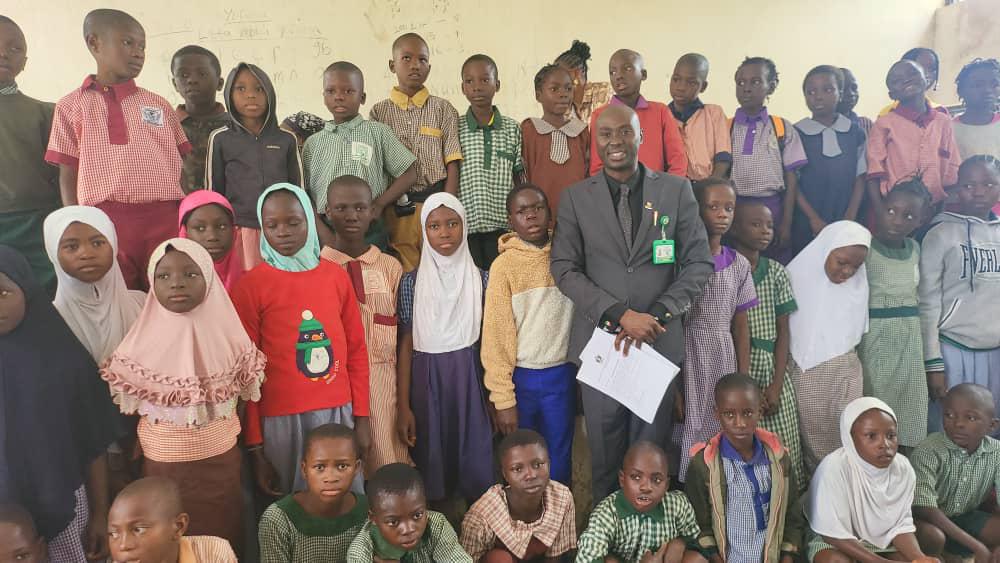
I want us to see school feeding beyond charity. The National Home-Grown School Feeding Programme is not just about food. It is about education, welfare, and NATIONAL SECURITY. When you understand it well, you will see it’s a powerful weapon against insecurity in Nigeria.
WHAT IS NATIONAL HOME-GROWN SCHOOL FEEDING PROGRAMME ( (NHGSP) REALLY?
The National Home-Grown School Feeding Programme (NHGSP) is a major social intervention initiative of the Federal Government of Nigeria, introduced in 2016 under the National Social Investment Programme (NSIP). The programme is designed to tackle critical challenges such as poor child nutrition, low school enrolment, and high dropout rates among pupils in public primary schools. Beyond its immediate educational benefits, the National Home-Grown School Feeding Programme also serves as a catalyst for local economic growth by promoting agricultural productivity through the sourcing of food from local farmers. As a strategic tool for educational development, the programme strengthens human capital development while supporting Nigeria’s commitment to the Sustainable Development Goals (SDGs), particularly Goals 1 (No Poverty), 2 (Zero Hunger), and 4 (Quality Education). But here’s the bigger picture: It tackles the root causes of insecurity. The National Home-Grown School Feeding Programme is more than feeding. It is a strategic investment in Nigeria’s peace. By feeding a child today, we disarm a potential bandit tomorrow.

By educating them, we prevent insecurity. A nation that nourishes its children secures its future. Thank you.
HOW SCHOOL FEEDING ADDRESSES NATIONAL SECURITY
National security is not only guns and soldiers. It includes: Food security, Human development, Social stability and Economic inclusion. National Home-Grown School Feeding Programme delivers on all four:
a. Reduces Poverty and Hunger Fed children: less pressure on poor families = fewer kids pushed into crime, child labour, or exploitation.
b. Keeps Kids in School: A hungry child won’t learn. A child out of school is easy prey for bandits and extremists. School feeding keeps 9M plus children in class and away from danger.
c. Stops Youth Radicalization: Education + food = resilience. A child in school is harder to recruit into insurgency or cultism.
d. Builds Local Economies: Food is sourced from local farmers. Over 200,000 farmers and 100,000 cooks earn income. Jobs reduce the frustration that breeds insecurity.
Bottom line: An empty stomach has no loyalty to the state. We buy peace one meal at a time.
POLICY: MAKE IT A SECURITY TOOL
To unlock its full power, we need Legal Backing: Pass a law, so politics can’t kill the programme.
Work Together: Link National Home-Grown School Feeding Programme with Education, Agriculture, Health, and Security agencies.
Use Real Data: Track attendance, nutrition, and security impact.
Fund It Properly: Guaranteed budget. No more stop-start funding.
STRATEGY: WHERE AND HOW TO DEPLOY
a. Focus on Hotspots: Prioritize Zamfara, Katsina, Borno, Niger areas hit by banditry and insurgency.
b. Community Must Own It: Traditional rulers, parents, Parent Teachers Associations (PTAs) must protect the programme.
c. Empower Farmers: Strengthen “home-grown” so local farmers truly benefit.
d. Kill Corruption: Use tech with community monitoring to stop leakages.
IMPLEMENTATION: MAKE IT WORK
Good ideas fail without execution. We must: Train People: Cooks, managers, teachers need capacity. Clean Procurement: Transparent buying from farmers. Check Results: Regular evaluation — are we reducing out-of-school kids? Tell the Story: Nigerians must know school feeding = national security. Partner Up: Work with NGOs, private sector, donors.
IN CONCLUSION
The National Home-Grown School Feeding Programme transcends humanitarian gesture. It is statecraft. It is a non-kinetic instrument of national power deliberately designed to confront the root drivers of Nigeria’s insecurity — hunger, illiteracy, unemployment, and state absence.
By feeding a child today, we are not merely filling a stomach. We are: Disarming a potential bandit by denying extremists their primary recruitment pool. Securing our borders by building human capital and economic resilience in ungoverned spaces. Legitimizing the Nigerian state through daily, tangible presence in 53,000 plus communities. Creating intelligence by turning school attendance into Nigeria’s most reliable early warning system. The evidence is clear from policy and practice: You cannot bomb illiteracy. You cannot shoot hunger. But you can feed a child and starve a war (FMHADMSD, 2021; UNICEF Nigeria, 2022; ONSA, 2019).
Therefore, this paper submits that NHGSFP must be migrated from a social investment project to a Core Pillar of Nigeria’s National Security Architecture. Its survival must not be subject to political cycles or budgetary whims. It must be protected by law, funded as a security imperative, and integrated into the operational doctrine of all security agencies.
Final Policy Charge: A nation that nourishes its children secures its future. A nation that abandons them feeds its own insecurity.
Recommendation One
The Federal Ministry of Humanitarian Affairs, Disaster Management and Social Development/Federal Ministry of Education in collaboration with the Office of the National Security Adviser should designate the National Home-Grown School Feeding Programme as Critical National Security Infrastructure and integrate it into Nigeria’s National Security Strategy.
Implementation Strategies
i. The Federal Ministry of Humanitarian Affairs, Disaster Management and Social Development/Federal Ministry of Education in collaboration with the Office of the National Security Adviser to initiate a National Security Council Memorandum for the designation of the National Home-Grown School Feeding Programme as Critical National Security Infrastructure, by Second Quarter, 2026.
ii. The Office of the National Security Adviser to establish a Joint Inter-Agency Task Force on National Home-Grown School Feeding Programme-Security Nexus comprising the Federal Ministry of Humanitarian Affairs, Disaster Management and Social Development/Federal Ministry of Education, Federal Ministry of Defence, Nigeria Police Force, Nigeria Security and Civil Defence Corps, and the Alumni Association of the National Institute, by Third Quarter, 2026.
iii. The Federal Ministry of Justice to draft an Executive Order declaring attacks on National Home-Grown School Feeding Programme schools as attacks on National Assets, by Third Quarter, 2026.
Recommendation Two
The National Assembly should expedite the passage of the National School Feeding Act to institutionalize the programme and guarantee statutory funding.
Implementation Strategies
i. The Federal Ministry of Humanitarian Affairs, Disaster Management and Social Development/Federal Ministry of Education to re-present the National School Feeding Bill to the National Assembly for accelerated hearing, by Second Quarter, 2026.
ii. The Senate and House of Representatives Committees on National Security, Education, and Poverty Alleviation to conduct public hearings with inputs from the National Institute for Policy and Strategic Studies and security agencies, by Third Quarter, 2026.
iii. The National Assembly to pass the Bill with provisions ring-fencing one percent of the Consolidated Revenue Fund for the National Home-Grown School Feeding Programme as National Security Expenditure, by Fourth Quarter, 2026.Recommendation Three
The Federal Government through the Federal Ministry of Humanitarian Affairs, Disaster Management and Social Development/Federal Ministry of Education in collaboration with State Governments should ensure full-scale implementation of the National Home-Grown School Feeding Programme with priority to Local Government Areas with high Security Vulnerability Index.
Implementation Strategies
i. The Federal Ministry of Humanitarian Affairs, Disaster Management and Social Development/Federal Ministry of Education in collaboration with State Governments and the State Universal Basic Education Board to relaunch and scale up the programme in Zamfara State, Katsina State, Borno State, Niger State, and Sokoto State, by Third Quarter, 2026.
ii. The Local Government Education Authority to establish National Home-Grown School Feeding Programme-Security Committees chaired by Traditional Rulers with the Divisional Police Officer, Department of State Services, and Parents-Teachers Association as members to oversee school-level operations, by Third Quarter, 2026.
iii. The Federal Ministry of Humanitarian Affairs, Disaster Management and Social Development/Federal Ministry of Education in collaboration with the Office of the National Security Adviser to conduct baseline security-impact assessments to track enrolment, retention, and conflict incidents before and after programme resumption, by Third Quarter, 2026.Recommendation Four
iv. The Federal and State Governments should deploy technology and community structures to ensure transparency, accountability, and security integration of the National Home-Grown School Feeding Programme.
Implementation Strategies
i. The Federal Ministry of Humanitarian Affairs, Disaster Management and Social Development/Federal Ministry of Education in collaboration with the National Information Technology Development Agency to deploy biometric attendance systems and digital payment platforms for cooks and farmers nationwide, by First Quarter, 2027.
ii. The Office of the National Security Adviser to develop and operate a National Home-Grown School Feeding Programme Security Dashboard linking real-time school attendance data to the Department of State Services, Nigeria Police Force, and Nigeria Security and Civil Defence Corps for early warning, by Second Quarter, 2027.
iii. The National Orientation Agency in collaboration with the Alumni Association of the National Institute to launch “Feed a Child, Secure a Nation” strategic communication campaign across all Local Government Areas, by Third Quarter, 2027.Recommendation Five
iv. The National Institute for Policy and Strategic Studies through the National Peace and Security Centre should develop and mainstream peace education and security awareness into National Home-Grown School Feeding Programme delivery structures.
Implementation Strategies
i. The National Institute for Policy and Strategic Studies and the National Peace and Security Centre to design and produce Peace and Civic Values Module for cooks, farmers, and School-Based Management Committees, by Fourth Quarter, 2026.
ii. The Federal Ministry of Humanitarian Affairs, Disaster Management and Social Development/Federal Ministry of Education in collaboration with the National Institute for Policy and Strategic Studies to train 100,000+ cooks and 200,000+ farmers as grassroots Peace Advocates and Early Warning Monitors, by Third Quarter, 2027.
iii. The Alumni Association of the National Institute National Executive to adopt Local Government Areas for National Home-Grown School Feeding Programme monitoring and advocacy as part of Alumni National Security Contribution, by Third Quarter, 2027.
REFERENCES
Federal Government of Nigeria. National Social Investment Programme: National Home-Grown School Feeding Programme Implementation Guidelines.
Federal Ministry of Humanitarian Affairs, Disaster Management and Social Development, 2021.United Nations Development Programme.
Human Development Report 1994: New Dimensions of Human Security. Oxford University Press, 1994.
National Institute for Policy and Strategic Studies. Non-Kinetic Approaches to National Security: Policy Options for Nigeria. NIPSS Policy Paper Series, 2023.United Nations Children’s Fund. The Impact of School Feeding on Education and Social Protection in Nigeria. UNICEF Nigeria, 2022.
Office of the National Security Adviser. National Security Strategy of the Federal Republic of Nigeria 2019.

Federal Government of Nigeria, 2019.World Food Programme. State of School Feeding Worldwide 2022. WFP, 2022.
Federal Ministry of Education. Safe Schools Initiative: Framework for Protecting Schools in Nigeria. FME, 2022.Buzan, B. People, States and Fear: An Agenda for International Security Studies in the Post-Cold War Era. Lynne Rienner, 1991.
You can get every of our news as soon as they drop on WhatsApp ...To get all news updates, Join our WhatsApp Group (Click Here)