



As the 2027 general election gradually approaches, the political atmosphere in Oyo State is becoming more animated. Campaign drums are softly beginning to beat. Conversations are shifting from performance to projections. Yet, beyond the noise, one fundamental question confronts the good people of our state; Do we move forward with transformative leadership, or risk a return to destructive governance?
There is an old proverb: History never forgets the ruler who turned a city into a village nor the one who transformed a village into a city. Governance leaves footprints. Some footprints build roads; others leave potholes. Some inspire hope; others institutionalize hardship.
In political discourse, there is often pressure to “let the past go” to avoid reopening old wounds. But governance is not built on sentiment; it is built on evidence. Referencing the past is not about blame, it is about learning. Societies that refuse to evaluate their history risk repeating it.

Oyo people have lived through different leadership models. We have experienced times when uncertainty defined public service, when civil servants anxiously awaited salaries, and when economic instability weakened household confidence. The infamous half-salary regime, popularly known as “Afusa” remains a stark reminder of how policy decisions directly affect dignity and productivity.


As someone who worked in the banking sector during that period, I witnessed firsthand the struggles of civil servants. Accessing basic financial facilities became a herculean task due to irregular salary payments. Financial institutions hesitated. Confidence was low. Morale was weaker.
Today, the story is markedly different.

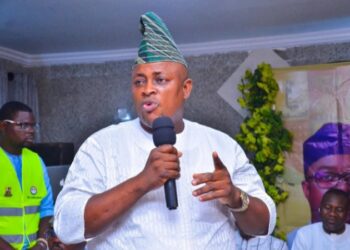
Under the leadership of Governor Seyi Makinde, Oyo State has experienced what can best be described as a recalibration of governance standards.

Intentional leadership has replaced improvisation. Data-driven planning has replaced guesswork. Regular salary payments have restored dignity to civil servants. Infrastructure development has expanded beyond urban centers to rural communities. Investors now see Oyo as stable. Students find opportunity. Retirees find relative peace of mind.
In a recent discussion with a former banking colleague, he made a striking observation: Oyo State civil servants have become among the most reliable salary-backed loan clients in recent years, a sharp contrast to the uncertainties of the past. His question was simple: “How will this progress be sustained beyond 2027?”
My response was equally straightforward:
Sustainability lies in continuity of values not just personalities. It lies in protecting the governance culture that prioritizes people over politics, development over drama, and structure over sentiment. Our people are not strangers to comparison. They have experienced both models. The difference is not theoretical, it is lived reality.
The 2027 election is not merely about party competition. It is about trajectory.
Will Oyo consolidate on reforms that have repositioned it among leading subnational governments in Nigeria? Or will it gamble with hard-earned stability?
Political noise is inevitable. Opposition rhetoric is expected. But measurable governance outcomes remain the strongest campaign message. Roads constructed, schools upgraded, healthcare strengthened, security architecture improved, prompt salary payments ensured, these are not slogans; they are verifiable indicators.
Oyo State today stands as a competitive and livable state attractive to investors, hospitable to tourists, welcoming to students, and reliable for workers.
Beyond the noise, let the political noise continue if it must. In many ways, it is oxygen that fuels further performance. Governance is best defended by results, not rebuttals.

As 2027 approaches, the choice before Oyo is simple but profound: Progress or regression, structure or instability, transformation or destruction.
History will record the decision.


You can get every of our news as soon as they drop on WhatsApp ...To get all news updates, Join our WhatsApp Group (Click Here)